


Solar Panel Bracket Steel Pipe: Definition, Classification, Performance and Selection Guidelines
2026/09/10
51
Solar panel bracket steel pipe is a dedicated structural steel product for solar power generation systems. Serving as the core load-bearing and supporting component of solar mounting structures, it undertakes the dead load of solar panels, as well as dynamic loads such as wind pressure, snow pressure and seismic force. Unlike conventional fluid transmission steel pipes, solar panel bracket pipes focus on structural stability, outdoor anti-corrosion performance, wind resistance and assembly accuracy. With the rapid development of the global new energy industry, standardized and high-quality solar panel bracket steel pipes have become the key to ensuring long-term safe operation and reducing maintenance costs of solar power stations. This article systematically elaborates on the definition, classification, core performance, surface treatment, application scenarios and professional selection criteria of solar panel bracket steel pipes.
1. What Is Solar Panel Bracket Steel Pipe?
Solar panel bracket steel pipe refers to various shaped steel pipes specially used for manufacturing solar panel mounting frames, support columns, cross beams, diagonal braces and fixing structures. It belongs to structural engineering steel pipes rather than pressure-bearing fluid pipes, with design priorities on mechanical load resistance, outdoor weather resistance and modular assembly performance.
Most solar panel bracket pipes adopt welded hot-rolled carbon steel base materials, with standardized wall thickness and section specifications. After strict anti-corrosion surface treatment, they can adapt to long-term outdoor exposure, desert, coastal, mountain and other complex harsh environments, ensuring a service life of 25–30 years for solar power stations, matching the full life cycle of solar power generation equipment.
2. Common Types of Solar Panel Bracket Steel Pipes
According to cross-sectional shape and structural functions, solar panel bracket steel pipes are mainly divided into four categories, applicable to different power station types and load requirements:
2.1 Square Steel Pipe
Square steel pipe is the most widely used type for solar panel brackets, with specifications such as 40×40mm, 50×50mm, 60×60mm and 80×80mm. It features uniform stress distribution, strong torsional resistance and high structural rigidity, suitable for main support columns and main cross beams of ground power stations, rooftop distributed solar systems and carport solar systems. Its regular section is convenient for punching, cutting and modular assembly, which greatly improves on-site construction efficiency.
2.2 Rectangular Steel Pipe
Rectangular steel pipes have asymmetric section strength, with higher bending resistance in the vertical direction. They are mostly used for auxiliary cross beams, purlins and connecting supports of solar panel brackets, effectively reducing material weight while meeting load-bearing requirements. They are widely used in lightweight rooftop solar projects with limited building bearing capacity.
2.3 Round Steel Pipe
Round solar panel bracket steel pipes have excellent wind resistance and balanced omnidirectional stress performance, which can effectively reduce wind load impact. They are commonly used for vertical support columns of large ground solar power stations, agricultural greenhouse solar systems and mountain solar projects, adapting to strong wind and complex terrain environments.
2.4 Special-Shaped & Profiled Steel Pipe
Including octagonal pipes, slotted pipes and customized profiled pipes, such products are mainly used for high-end solar tracking support systems. The optimized section structure improves structural stability and assembly precision, suitable for high-precision automatic tracking solar power stations and large-scale industrial new energy projects.
3. Main Material Grades & Industry Standards
Solar panel bracket steel pipes have strict standardized requirements for base material mechanical properties to adapt to long-term outdoor dynamic loads. Common mainstream materials and authoritative standards are as follows:
Common Steel Grades: Q235B, Q355B low-alloy high-strength steel; international equivalent grades include ASTM A500 Grade B/C, S235JR, S355JR, which meet different load and wind resistance design requirements.
Core Implementation Standards: GB/T 6728, GB/T 13793, ASTM A500, EN 10219, NB/T 10115-2018 solar support design specification, ASCE 7-22 wind and snow load design standard, ensuring structural safety and batch consistency of products.
4. Surface Anti-Corrosion Treatment Technologies
The service life of solar panel brackets depends largely on surface anti-corrosion treatment. Long-term outdoor exposure requires resistance to ultraviolet aging, rain erosion, atmospheric oxidation and salt fog corrosion. The three mainstream treatment processes are as follows:
4.1 Hot-Dip Galvanizing (HDG)
The most traditional and reliable process for solar panel brackets. The steel pipe is immersed in high-temperature molten zinc liquid to form a thick metallurgical zinc layer (85–120μm). It features strong adhesion, scratch resistance and ultra-long anti-corrosion life, suitable for desert, coastal, high-altitude and high-corrosion environments, with a service life of more than 25 years.
4.2 Zinc-Aluminum-Magnesium (ZAM) Coating
A new high-efficiency anti-corrosion process, with the coating composed of zinc, aluminum and magnesium alloy. It has self-repairing and anti-rust capabilities for cutting and scratching parts. Compared with ordinary galvanizing, it has stronger salt fog resistance, thinner and more uniform coating, no surface zinc ash, beautiful appearance and lower later maintenance cost. It is the mainstream process for new high-standard solar power stations.
4.3 Powder Spraying & Painting
Mainly used for indoor and urban rooftop solar projects with low corrosion requirements. The surface coating is smooth and beautiful, with rich color options, but the anti-corrosion performance is weaker than hot-dip galvanizing and zinc-aluminum-magnesium coating, suitable for light-load and low-corrosion working conditions.
5. Core Performance Requirements for Solar Panel Bracket Steel Pipes
5.1 Excellent Wind and Snow Load Resistance
Solar power stations are exposed outdoors for a long time. The steel pipe must have high tensile strength, yield strength and bending toughness to resist extreme weather such as strong winds, heavy snow and hail, avoiding structural deformation, tilting or collapse.
5.2 Long-Term Weather Resistance
Qualified anti-corrosion coating can effectively resist ultraviolet radiation, temperature difference alternation, rainwater erosion and atmospheric corrosion, ensuring no obvious rust or performance attenuation within the 25–30 year power generation cycle.
5.3 High Dimensional Assembly Accuracy
Solar panel brackets adopt modular standardized assembly. The steel pipe’s straightness, section tolerance, hole position accuracy and length error must meet strict standards to ensure seamless docking of on-site components, improve installation efficiency and avoid structural assembly gaps.
5.4 Good Welding and Processing Performance
Steel pipes need to undergo cutting, punching, bending and welding processing. Stable material plasticity and weldability ensure no cracking or deformation during processing, and the welding joints have high structural strength to meet overall load-bearing requirements.
5.5 Lightweight and High Strength
Under the premise of meeting safety loads, high-strength low-alloy steel pipes can reduce self-weight, lower foundation bearing requirements, save project costs, and be suitable for complex terrains such as rooftops, hillsides and tidal flats.
6. Typical Application Scenarios
Ground Solar Power Stations: Large-scale centralized power stations in plains, deserts and mountains, using square and round high-strength galvanized steel pipes as main supports to resist extreme wind and snow loads.
Rooftop Distributed Solar Systems: Used for industrial factory buildings, commercial buildings and residential rooftop power stations, adopting lightweight rectangular and square steel pipes to reduce building load pressure.
Solar Carports: Applied for parking lot solar power generation and shading integration projects, requiring high structural rigidity and beautiful appearance, matching zinc-aluminum-magnesium anti-corrosion process.
Agrivoltaic & Aquavoltaic Systems: Agricultural greenhouse solar systems and fishery complementary power stations, adapting to humid and multi-corrosion environments, prioritizing high weather-resistant coated steel pipes.
Solar Tracking Systems: Used for automatic angle-adjusting solar panel brackets, adopting high-precision special-shaped steel pipes to ensure long-term stable operation of mechanical transmission structures.
7. Professional Selection Guidelines
Match Material Grade with Load: Choose Q235B for conventional light and medium-load projects; select Q355B high-strength steel for heavy-load, strong wind and snow areas to improve structural safety margin.
Select Anti-Corrosion Process According to Environment: Adopt zinc-aluminum-magnesium coating for coastal salt fog, humid and high-corrosion areas; use hot-dip galvanizing for desert and inland open areas; choose powder spraying for urban rooftop decorative solar projects.
Optimize Pipe Section by Usage: Square pipes for main load-bearing beams and columns; rectangular pipes for auxiliary purlins; round pipes for wind-resistant vertical supports; special-shaped pipes for high-end tracking systems.
Standardize Specification Matching: Select wall thickness in the range of 1.5–3.0mm according to design load (2.0–2.5mm is the most common standard thickness for conventional projects), and prioritize products compliant with national and international industry standards.
Verify Quality Certification: Require complete mill test reports, coating thickness detection reports and structural performance test reports to ensure batch product stability and project qualification acceptance.
Balance Life Cycle Cost: High-standard anti-corrosion materials have slightly higher initial investment but can reduce later maintenance and replacement costs, meeting the long-term operation requirements of solar power stations.
8. Limitations and Engineering Notes
Ordinary low-quality cold-rolled uncoated steel pipes are prohibited for outdoor solar panel brackets, as they are prone to rapid rusting and structural failure, failing to meet long-term operation requirements.
Coating damage caused by cutting, welding and drilling during processing must be repaired with zinc-rich paint or special repair agents to avoid local rust expansion.
In high-temperature and high-humidity corrosive areas, thickened coating or enhanced anti-corrosion processes must be adopted to extend service life.
The steel pipe’s wall thickness and section shall not be arbitrarily reduced to save costs, so as to avoid insufficient wind and snow resistance leading to safety accidents.
Conclusion
Solar panel bracket steel pipe is the fundamental structural guarantee for the safe and stable operation of solar power generation systems. Different from traditional fluid steel pipes, it takes structural load resistance, outdoor weather resistance and long-term durability as the core indicators. In engineering selection, it is necessary to comprehensively match steel grade, pipe type, anti-corrosion process and specification parameters according to regional climate, environmental corrosion degree, project type and load design standards. Scientific and standardized selection of solar panel bracket steel pipes can effectively ensure the 25–30 year stable power generation cycle of solar power stations, reduce operation and maintenance costs, and maximize the economic benefits of new energy projects.
Related news
-
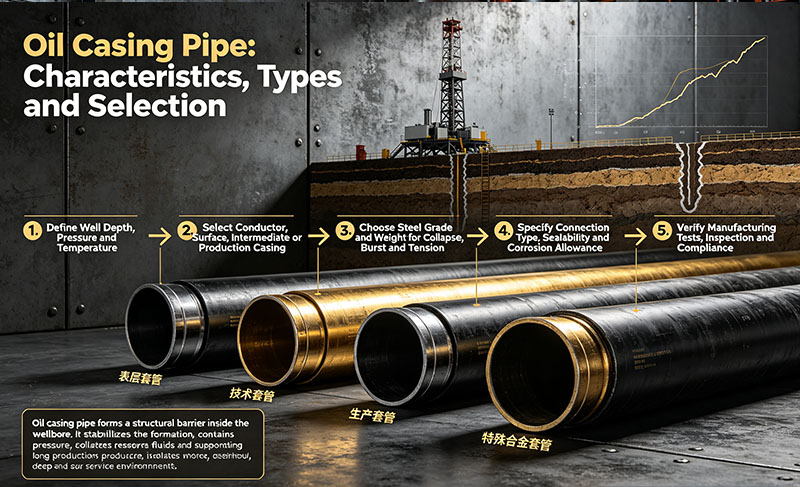
Oil Casing Pipe: Types, Steel Grades, Performance and Oilfield Selection Guide
Oil casing pipe is a core special seamless steel pipe used in petroleum and natural gas drilling and production engineering. As the main structural barrier of oil and gas wells, it runs through the entire wellbore and undertakes critical functions such as stratum support, well wall stabilization, pressure isolation, -
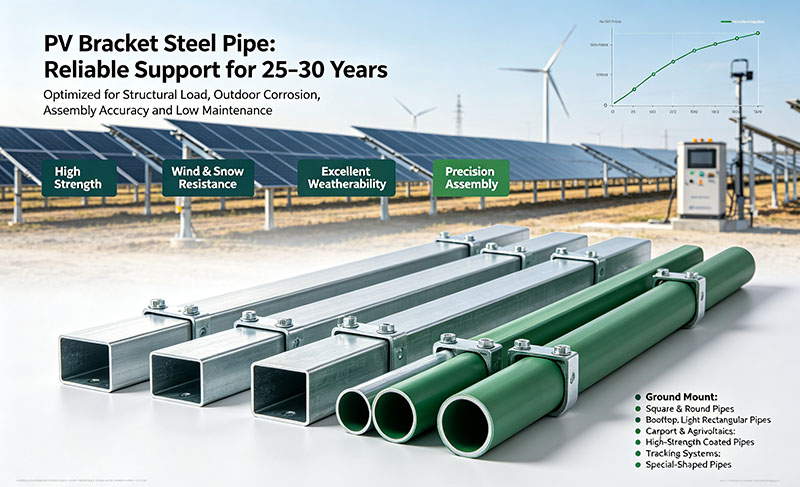
A Comprehensive Guide to Solar Panel Bracket Steel Pipes: Classification, Performance, Treatment and
Solar panel bracket steel pipe is a specialized structural steel product tailored for solar power generation systems. As the core load-bearing and supporting component of solar mounting structures, it sustains the static dead load of solar panels, as well as dynamic loads induced by wind pressure, snow accumulation and seismic activity. -
Solar Panel Bracket Steel Pipe: Definition, Classification, Performance and Selection Guidelines
Solar panel bracket steel pipe is a dedicated structural steel product for solar power generation systems. Serving as the core load-bearing and supporting component of solar mounting structures, it undertakes the dead load of solar panels, as well as dynamic loads such as wind pressure