


1. What Is Hot-Rolled Seamless Steel Pipe?
2. Complete Hot Rolling Manufacturing Process
Billet Preparation: Select qualified round steel billets, inspect chemical composition and surface quality, and cut to fixed length to remove defective parts.
High-Temperature Heating: Heat the billet uniformly in a rotary heating furnace to reach the optimal rolling temperature, ensuring sufficient plasticity for subsequent piercing and rolling.
Piercing: The heated solid billet is pierced by a piercing mill to form a hollow tube shell with preliminary tubular structure.
Tube Rolling & Wall Thickness Forming: The tube shell is rolled through continuous rolling mills to accurately control wall thickness and eliminate internal structural defects.
Sizing & Reducing: Adjust the outer diameter to standard specifications through sizing mills to ensure dimensional uniformity of the pipe body.
Cooling & Straightening: The high-temperature pipe is cooled naturally or forcibly to room temperature, then straightened to eliminate pipe body bending and ensure flatness.
Finishing & Testing: Cut pipe ends, remove burrs, and conduct hydrostatic pressure test, ultrasonic flaw detection, mechanical property test and dimensional inspection, before final marking and warehousing.
3. Core Advantages and Limitations
3.1 Key Advantages
Superior Overall Mechanical Performance: High-temperature rolling refines steel grain structure, resulting in high tensile strength, good toughness and strong impact resistance. The integrated seamless structure avoids welding weakness, ensuring high safety under high pressure and heavy load.
Wide Specification Coverage: It is the mainstream process for manufacturing large-diameter and thick-wall seamless pipes, which are irreplaceable in heavy industrial pipeline construction.
Low Residual Stress: High-temperature forming eliminates internal stress concentration, so the pipe is not easy to deform or crack during subsequent processing and long-term service.
High Production Efficiency and Cost-Effectiveness: Suitable for mass industrial production with stable output. Compared with cold-drawn pipes, hot-rolled products have lower unit cost and higher material utilization for large-size specifications.
3.2 Inherent Limitations
Ordinary Dimensional Accuracy: Affected by high-temperature thermal expansion and cooling shrinkage, the dimensional tolerance of hot-rolled pipes is larger than that of cold-drawn pipes, failing to meet ultra-high-precision matching scenarios.
Relatively Rough Surface: Oxide scale is easily formed on the surface during high-temperature heating and rolling, resulting in a matte surface without the smooth finish of cold-drawn pipes.
Limited Ultra-Fine Specification Production: Hot rolling is not suitable for producing ultra-thin-wall and tiny-diameter precision pipes, which are dominated by cold-drawn technology.
4. Typical Application Scenarios
Oil and Gas Industry: Used for long-distance crude oil, natural gas transmission pipelines, oil casing and downhole tubulars, adapting to high-pressure and complex underground working conditions.
Power and Boiler Industry: Ideal for power station boiler superheated steam pipes, heat exchanger pipes and high-pressure water supply pipelines, stably serving long-term high-temperature and high-pressure environments.
Chemical Processing: Applied to chemical reaction pipelines, high-pressure vessel pipes and medium transmission pipelines, with reliable structural stability for conventional corrosive media and high-pressure working conditions.
Mechanical Manufacturing: Used for hydraulic system pipes, transmission shafts, bearing sleeves and heavy mechanical structural parts, providing sufficient load-bearing capacity and wear resistance.
Construction and Municipal Engineering: Served as underground buried pipelines, building load-bearing steel structures and foundation engineering pipes, with strong structural durability.
5. Hot-Rolled vs Cold-Drawn Seamless Pipes: Clear Selection Differences
6. Professional Selection Guidelines for Hot-Rolled Pipes
Match Working Conditions First: For high-temperature steam and boiler systems, select high-temperature resistant carbon steel or alloy steel grades (ASTM A106 B, A335 series); for oil and gas high-pressure transmission, adopt API 5L X-series high-strength grades; for general fluid and structural purposes, conventional carbon steel grades are sufficient.
Select Specifications According to Load Requirements: Large-diameter and thick-wall hot-rolled pipes must be selected for high-pressure and heavy-load scenarios to ensure pressure-bearing safety; avoid over-specification to control costs.
Verify Standard Compliance: Prioritize products that meet ASTM, API, EN and other international standards, and require complete mill test reports (MTC) to ensure chemical composition and mechanical properties meet design requirements.
Distinguish Usage Purposes Strictly: Mechanical structural hot-rolled pipes cannot be used for pressure-bearing fluid pipelines, and boiler dedicated pipes cannot be replaced by ordinary structural pipes, to avoid potential safety hazards.
Conclusion
Related news
-
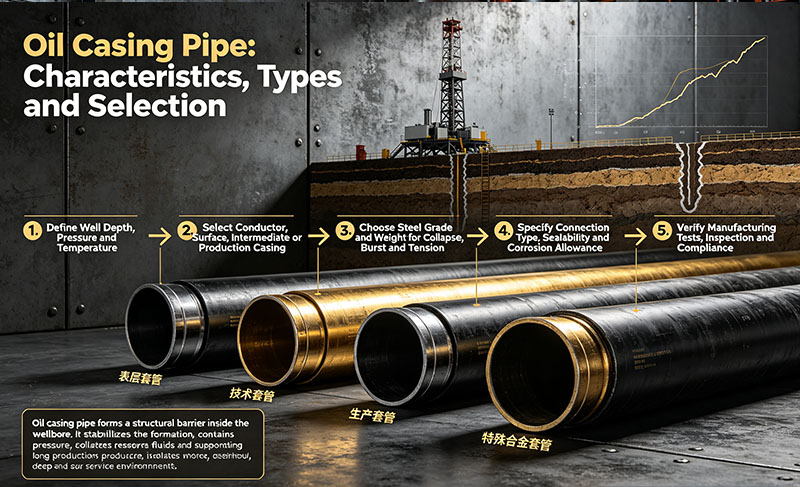
Oil Casing Pipe: Types, Steel Grades, Performance and Oilfield Selection Guide
Oil casing pipe is a core special seamless steel pipe used in petroleum and natural gas drilling and production engineering. As the main structural barrier of oil and gas wells, it runs through the entire wellbore and undertakes critical functions such as stratum support, well wall stabilization, pressure isolation, -
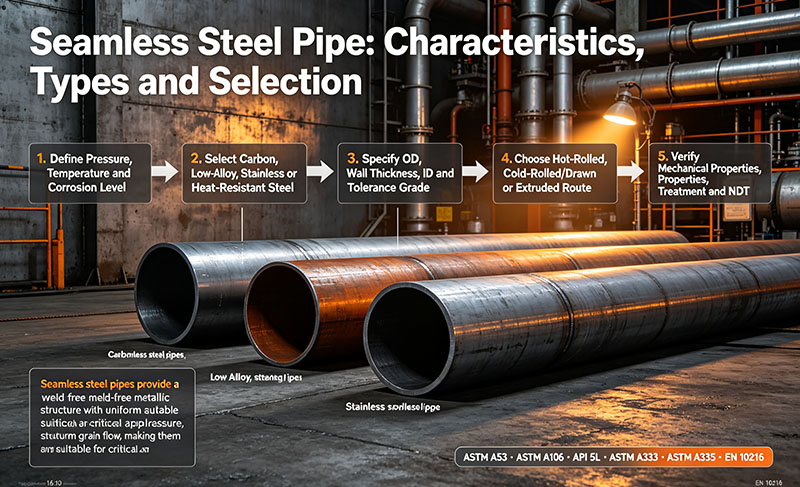
A Comprehensive Guide to Solar Panel Bracket Steel Pipes: Classification, Performance, Treatment and
Solar panel bracket steel pipe is a specialized structural steel product tailored for solar power generation systems. As the core load-bearing and supporting component of solar mounting structures, it sustains the static dead load of solar panels, as well as dynamic loads induced by wind pressure, snow accumulation and seismic activity. -
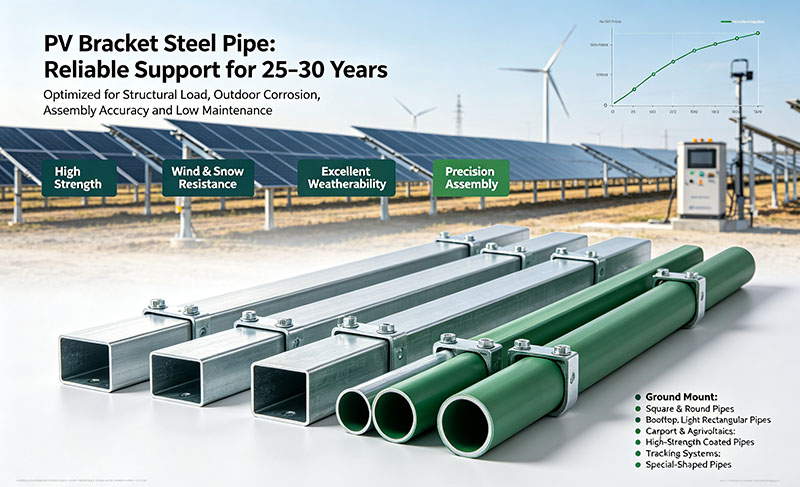
Solar Panel Bracket Steel Pipe: Definition, Classification, Performance and Selection Guidelines
Solar panel bracket steel pipe is a dedicated structural steel product for solar power generation systems. Serving as the core load-bearing and supporting component of solar mounting structures, it undertakes the dead load of solar panels, as well as dynamic loads such as wind pressure -
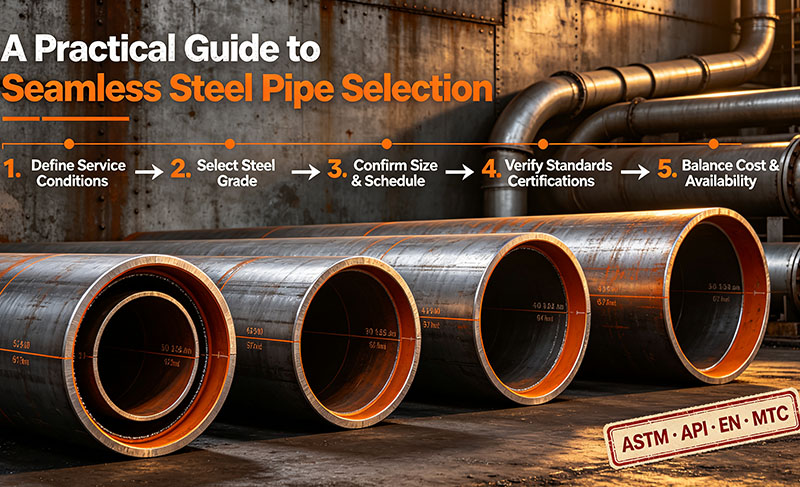
A Complete Guide to Selecting the Right Seamless Steel Pipe
Seamless steel pipes are essential components in oil and gas, chemical processing, power generation, hydraulic systems, and industrial piping projects. Unlike welded steel pipes, they feature no longitudinal weld seams, delivering uniform structural strength, superior pressure resistance, and excellent durability under extreme working conditions. -
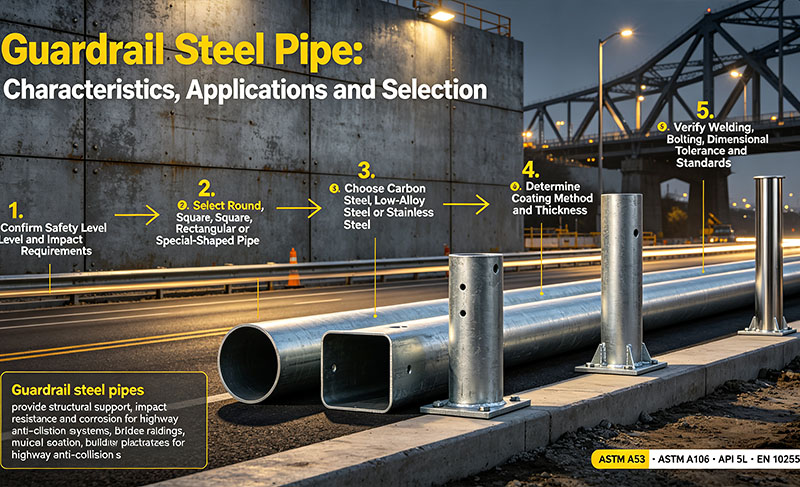
Galvanized Steel Pipe: Process, Types, Properties, Applications and Selection Guide
Galvanized steel pipe is one of the most common and practical tubular products in civil engineering, construction, agriculture, machinery and infrastructure. -
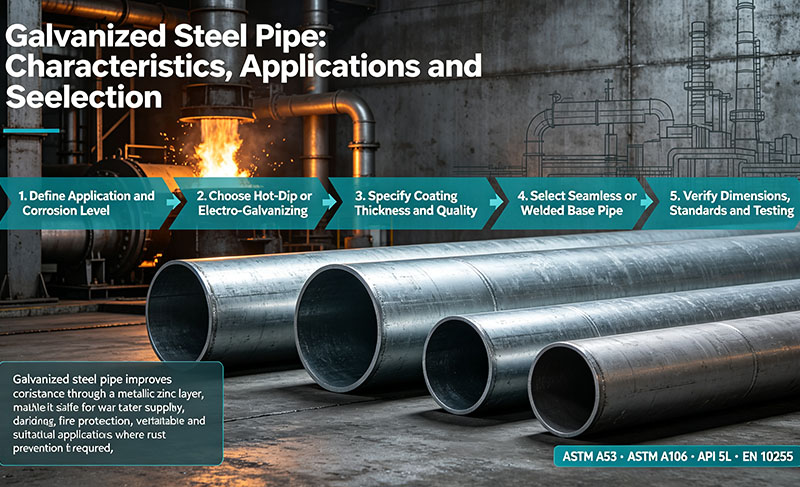
Galvanized Steel Pipe: Process, Types, Properties, Applications and Selection Guide
Galvanized steel pipe is one of the most common and practical tubular products in civil engineering, construction, agriculture, machinery and infrastructure. -
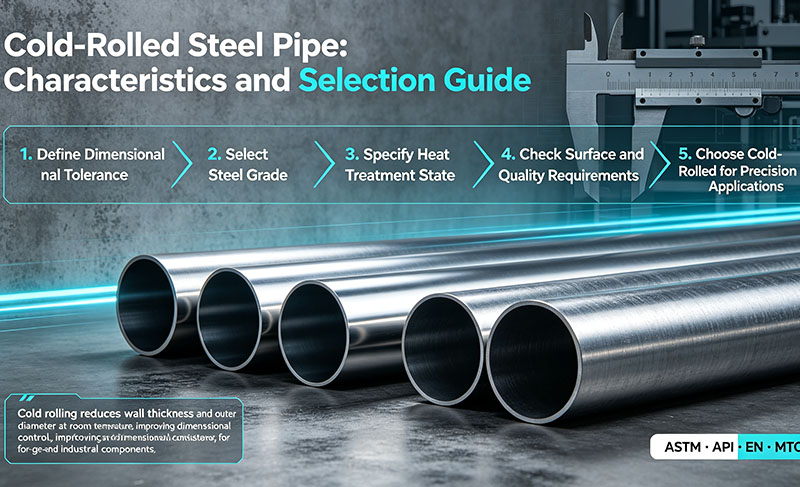
Cold-Rolled Steel Pipe: Characteristics, Process, Advantages, Applications and Selection Guide
Cold-rolled steel pipe is a high-precision tubular product manufactured by further processing hot-rolled or normalized pipe shells at room temperature through cold rolling, cold drawing or skin-pass reduction. -
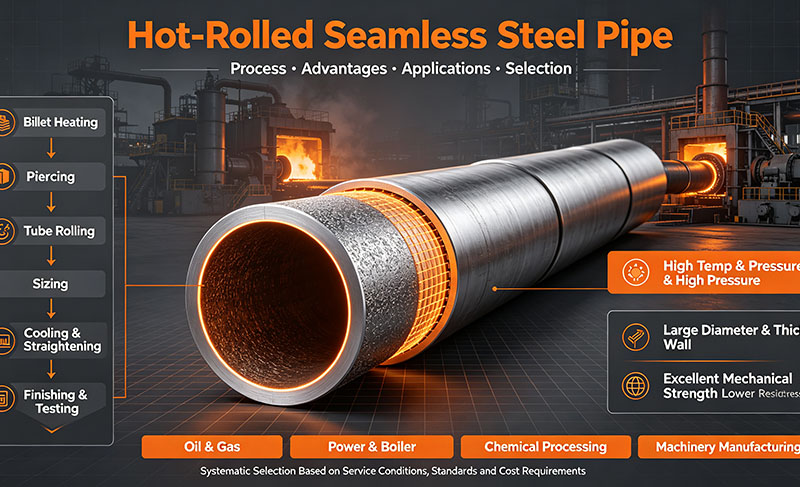
Hot-Rolled Seamless Steel Pipe: Process, Advantages, Applications and Selection Guide
Hot-rolled seamless steel pipe is one of the most widely used tubular products in heavy industry. Manufactured through high-temperature plastic deformation without any welding seam, it features integrated metal structure