


1. What Is Galvanized Steel Pipe?
2. Main Galvanizing Processes for Steel Pipe
2.1 Hot-Dip Galvanizing
2.2 Electro-Galvanizing
2.3 Other Galvanizing Methods
3. Core Advantages of Galvanized Steel Pipe
3.1 Excellent Corrosion Resistance
3.2 Long Service Life
3.3 Good Mechanical Strength
3.4 Easy Processing and Installation
3.5 Cost-Effectiveness
4. Limitations and Engineering Considerations
Not Suitable for Strong Corrosive Media: Galvanized pipes have limited corrosion resistance in strong acids, strong alkalis, high-concentration salt solutions and some chemical environments.
Potential Zinc Dissolution in Water: In certain water quality conditions, zinc may dissolve into drinking water, especially in new pipes. Water quality testing and proper flushing are required for potable water applications.
Coating Damage Risk: During transportation, handling, welding and installation, the zinc coating may be scratched or burned, exposing the steel substrate and requiring repair treatment.
Thermal Deformation: Hot-dip galvanizing involves high temperature, which may affect the straightness, roundness and dimensional accuracy of some thin-wall or precision pipes.
Threaded Connection Limitations: For threaded galvanized pipes, the coating thickness and thread tolerance must be matched to avoid assembly difficulties or sealing problems.
5. Typical Application Scenarios
Water Supply Pipelines: Used for drinking water transportation, building water supply, municipal water networks and farm water supply systems.
Drainage and Sewage Systems: Applied to building drainage, rainwater systems, municipal sewage pipelines and shallow buried drainage projects.
Fire Protection Systems: Used for fire water pipelines, sprinkler systems, hydrant pipes and fire-fighting equipment connections.
Ventilation and Air Conditioning: Applied to ventilation ducts, exhaust pipes, air conditioning condensate pipes and dust removal pipelines.
Agricultural Engineering: Used for farm irrigation pipes, greenhouse structure pipes, livestock equipment pipes and agricultural machinery accessories.
Structural and Support Applications: Applied to building scaffolding, support frames, cable conduits, highway guardrail pipes, street lamp poles and lightweight structural parts.
Mechanical and General Engineering: Used for bicycle frames, furniture frames, machinery casings, handrails, fences and low-pressure fluid pipes.
6. Galvanized Steel Pipe vs Black Steel Pipe
Zinc coating provides anti-corrosion protection;
Suitable for outdoor, water supply, drainage, fire protection and structural applications;
Longer service life in corrosive environments;
More expensive than black steel pipe.
No zinc coating, low cost;
Suitable for indoor gas pipelines, mechanical structures, heat exchange and applications where corrosion resistance is not the primary requirement;
Requires painting or other anti-corrosion treatment if used outdoors or in humid environments.
7. Professional Selection Guidelines
Clarify the Application: Determine whether the pipe is used for water supply, drainage, fire protection, ventilation, structure, piling, machinery or agricultural purposes.
Select the Right Galvanizing Process: Use hot-dip galvanizing for outdoor, buried and high-corrosion environments; use electro-galvanizing for indoor, precision and light-duty applications.
Specify Coating Requirements: Define minimum coating thickness, average coating weight, uniformity, adhesion and repair requirements according to standards.
Choose Base Pipe Type: Seamless pipe for higher pressure and structural requirements; welded pipe for general low-pressure water, gas and ventilation applications.
Consider Dimensional and Shape Requirements: Outer diameter, wall thickness, length, roundness, straightness, thread type and end finish should match the design and installation conditions.
Verify Standards and Testing: Common standards include ASTM A53, ASTM A106, API 5L, EN 10255 and ISO 65. Require inspection items such as zinc coating thickness test, weight test, bending test, flattening test and hydrostatic test.
Plan Post-Installation Protection: Damaged coating areas should be repaired with zinc-rich paint or suitable repair methods to avoid early rusting.
Conclusion
Related news
-
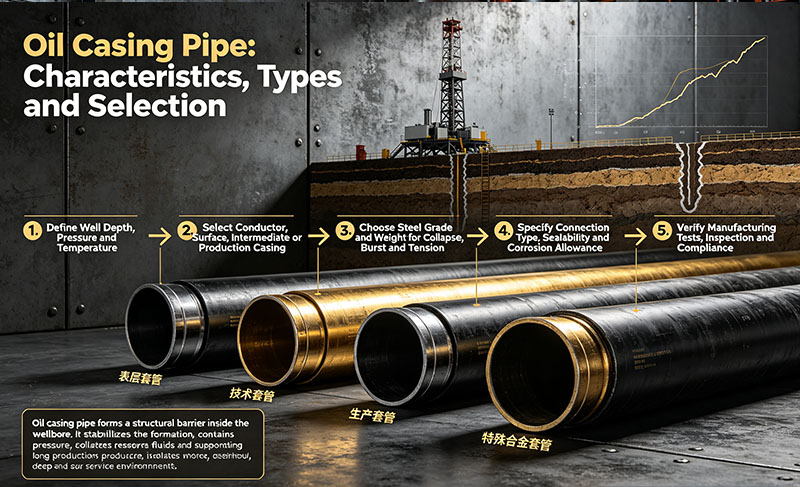
Oil Casing Pipe: Types, Steel Grades, Performance and Oilfield Selection Guide
Oil casing pipe is a core special seamless steel pipe used in petroleum and natural gas drilling and production engineering. As the main structural barrier of oil and gas wells, it runs through the entire wellbore and undertakes critical functions such as stratum support, well wall stabilization, pressure isolation, -
A Comprehensive Guide to Solar Panel Bracket Steel Pipes: Classification, Performance, Treatment and
Solar panel bracket steel pipe is a specialized structural steel product tailored for solar power generation systems. As the core load-bearing and supporting component of solar mounting structures, it sustains the static dead load of solar panels, as well as dynamic loads induced by wind pressure, snow accumulation and seismic activity. -
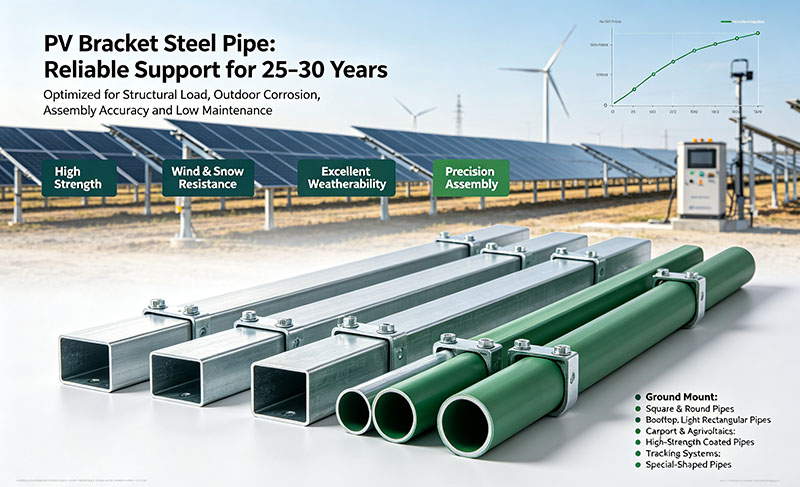
Solar Panel Bracket Steel Pipe: Definition, Classification, Performance and Selection Guidelines
Solar panel bracket steel pipe is a dedicated structural steel product for solar power generation systems. Serving as the core load-bearing and supporting component of solar mounting structures, it undertakes the dead load of solar panels, as well as dynamic loads such as wind pressure -
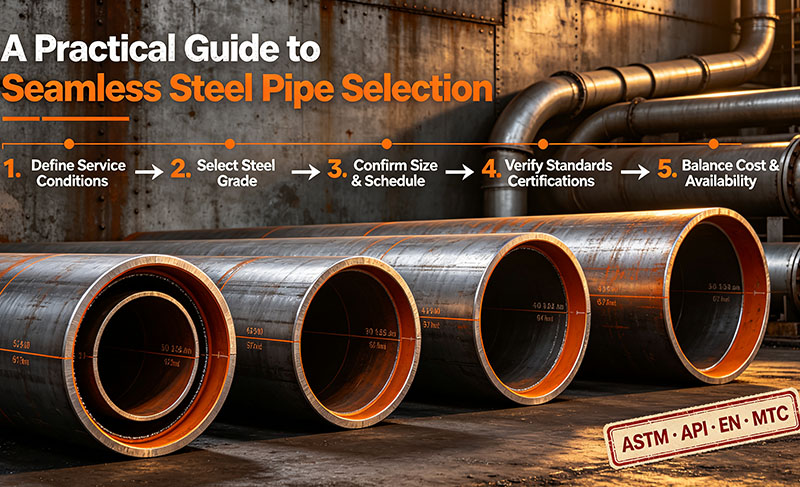
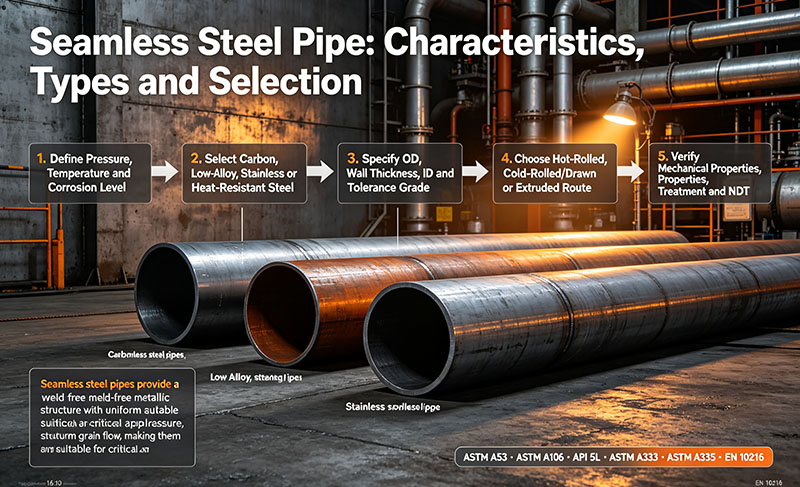
A Complete Guide to Selecting the Right Seamless Steel Pipe
Seamless steel pipes are essential components in oil and gas, chemical processing, power generation, hydraulic systems, and industrial piping projects. Unlike welded steel pipes, they feature no longitudinal weld seams, delivering uniform structural strength, superior pressure resistance, and excellent durability under extreme working conditions. -
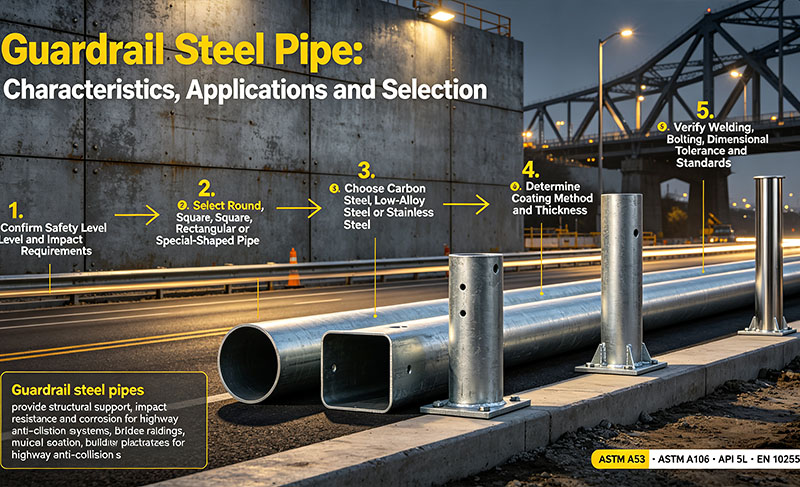
Galvanized Steel Pipe: Process, Types, Properties, Applications and Selection Guide
Galvanized steel pipe is one of the most common and practical tubular products in civil engineering, construction, agriculture, machinery and infrastructure. -
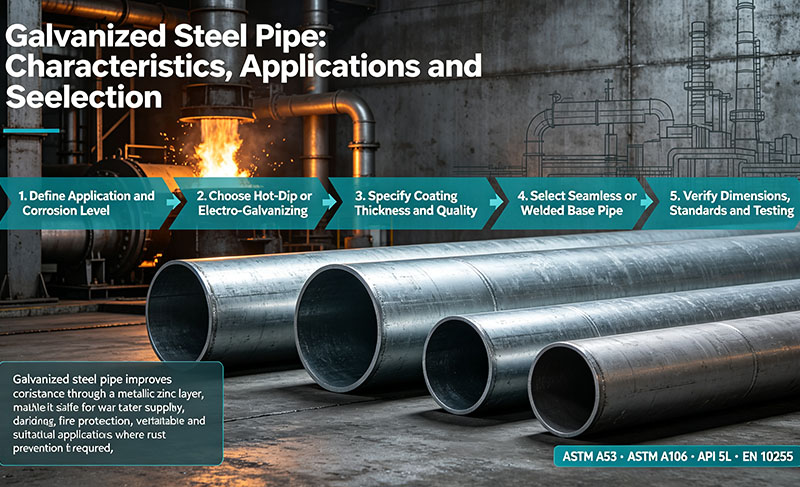
Galvanized Steel Pipe: Process, Types, Properties, Applications and Selection Guide
Galvanized steel pipe is one of the most common and practical tubular products in civil engineering, construction, agriculture, machinery and infrastructure. -
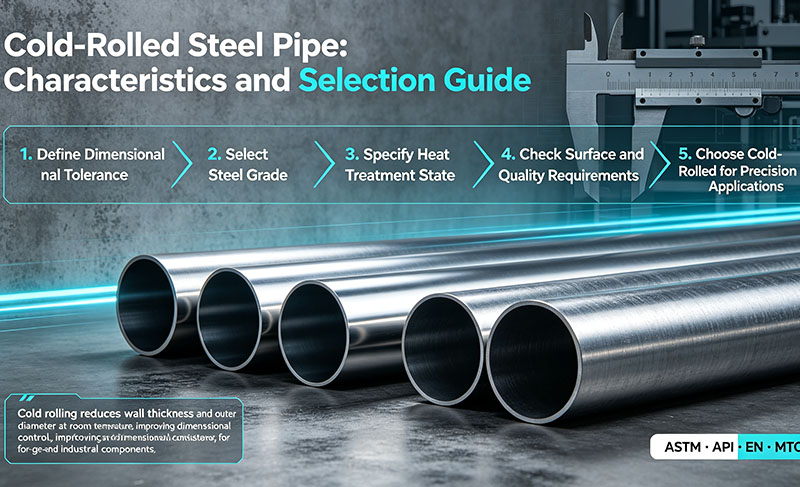
Cold-Rolled Steel Pipe: Characteristics, Process, Advantages, Applications and Selection Guide
Cold-rolled steel pipe is a high-precision tubular product manufactured by further processing hot-rolled or normalized pipe shells at room temperature through cold rolling, cold drawing or skin-pass reduction. -
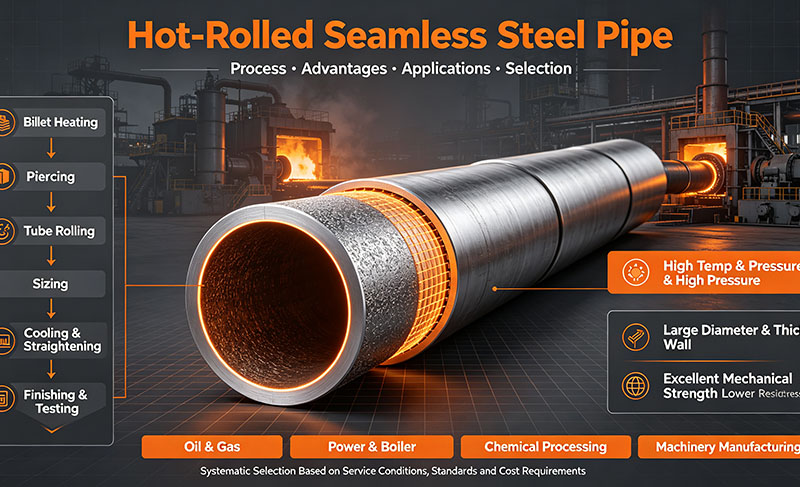
Hot-Rolled Seamless Steel Pipe: Process, Advantages, Applications and Selection Guide
Hot-rolled seamless steel pipe is one of the most widely used tubular products in heavy industry. Manufactured through high-temperature plastic deformation without any welding seam, it features integrated metal structure