


1. What Is Cold-Rolled Steel Pipe?
2. Typical Cold Rolling Manufacturing Process
Raw Pipe Selection: Use qualified hot-rolled seamless pipe or normalized welded pipe as raw material, with controlled chemical composition, mechanical properties and initial dimensional tolerance.
Heat Treatment Preparation: Anneal the raw pipe to soften the microstructure and improve plasticity, preparing it for subsequent cold deformation.
Pickling and Surface Treatment: Remove oxide scale and surface defects through pickling, then apply lubrication or coating treatment to reduce friction during cold rolling.
Cold Rolling / Cold Drawing: Pass the pipe through rollers or dies for multi-pass reduction. Wall thickness and outer diameter are gradually reduced to achieve precise target dimensions.
Intermediate Annealing: When work hardening becomes too severe, perform intermediate annealing to restore ductility and avoid cracking.
Final Sizing and Straightening: Conduct final sizing and straightening to ensure accurate diameter, roundness, straightness and uniform pipe body.
Finishing and Quality Inspection: Cut ends, remove burrs, and perform dimensional measurement, surface inspection, hardness test, mechanical property test and non-destructive testing as required, then mark and package.
3. Core Advantages of Cold-Rolled Steel Pipe
3.1 High Dimensional Accuracy
3.2 Excellent Surface Quality
3.3 Uniform Structure and Stable Performance
3.4 Higher Strength and Hardness
3.5 Good Suitability for Thin-Wall and Small-Diameter Production
4. Limitations and Engineering Considerations
Higher Production Cost: The multi-pass process, intermediate annealing and precision control increase manufacturing cost compared with ordinary hot-rolled pipes.
Lower Plasticity: Cold working reduces ductility, so excessive deformation without annealing may cause cracking, springback or dimensional instability.
Residual Stress: Cold deformation may introduce residual stress. For applications requiring high dimensional stability or corrosion resistance, stress-relief annealing may be necessary.
Limited by Size Range: Although cold rolling can produce small-diameter and thin-wall pipes, it is not economical for very large-diameter and super-thick-wall specifications.
5. Typical Application Scenarios
Hydraulic and Pneumatic Systems: Used for hydraulic cylinder tubes, precision oil pipes, pneumatic actuator pipes and high-pressure fluid control components.
Machinery and Equipment Manufacturing: Applied to precision structural parts, bearing sleeves, transmission shafts, valve bodies and mechanical connectors.
Automotive Industry: Used for drive shafts, shock absorber pipes, fuel system pipes, exhaust system components and other high-precision tubular parts.
Instrumentation and Control Equipment: Suitable for small-diameter precision pipes, sensor sleeves, guide tubes and instrument protection tubes.
Aerospace and Defense Components: High-grade cold-rolled precision pipes are used in hydraulic systems, actuator components and structural parts that require strict dimensional control.
Food, Pharmaceutical and Light Industry: Used for sanitary pipes, heat exchanger tubes, food processing equipment pipes and pharmaceutical machinery components where surface quality and cleanability are important.
6. Cold-Rolled vs Hot-Rolled Steel Pipe: How to Choose
High dimensional accuracy and tight tolerances are required;
A smooth, clean surface is needed;
The application involves thin-wall, small-diameter or precision machined parts;
Uniform mechanical properties and assembly consistency are critical;
The project allows a relatively higher cost for precision performance.
Large diameter, thick wall and heavy load are required;
High temperature, high pressure and excellent structural strength are the main concerns;
Surface finish and dimensional accuracy are not the primary requirements;
Lower cost and higher production efficiency are needed for large-size specifications.
7. Professional Selection Guidelines
Clarify the Purpose First: Determine whether the pipe is used for precision assembly, fluid transmission, structural support, heat exchange or special corrosion resistance.
Define Dimensional Requirements: Specify outer diameter, inner diameter, wall thickness, tolerance grade, roundness and straightness according to design drawings or assembly requirements.
Select Appropriate Steel Grade: Carbon steel for general precision structures; alloy steel for higher strength and hardness; stainless steel for corrosion resistance and sanitary applications.
Consider Heat Treatment State: Annealed, normalized, quenched and tempered, or stress-relieved conditions will affect hardness, plasticity and final machining performance.
Verify Surface and Quality Requirements: Decide whether pickled, oiled, polished, coated or internally cleaned surface is required, and define inspection levels such as dimensional inspection, ultrasonic testing, eddy current testing or pressure testing.
Balance Precision and Cost: High precision brings better assembly performance but higher cost. Select the most economical tolerance grade that meets the design requirements.
Conclusion
Related news
-
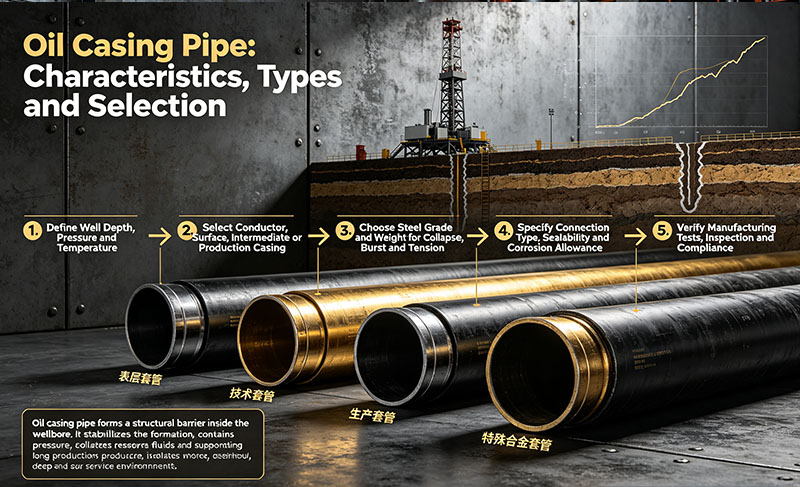
Oil Casing Pipe: Types, Steel Grades, Performance and Oilfield Selection Guide
Oil casing pipe is a core special seamless steel pipe used in petroleum and natural gas drilling and production engineering. As the main structural barrier of oil and gas wells, it runs through the entire wellbore and undertakes critical functions such as stratum support, well wall stabilization, pressure isolation, -
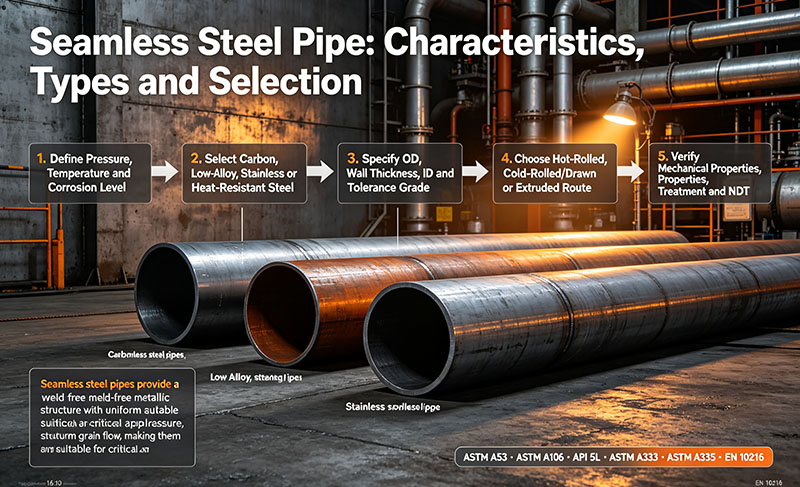
A Comprehensive Guide to Solar Panel Bracket Steel Pipes: Classification, Performance, Treatment and
Solar panel bracket steel pipe is a specialized structural steel product tailored for solar power generation systems. As the core load-bearing and supporting component of solar mounting structures, it sustains the static dead load of solar panels, as well as dynamic loads induced by wind pressure, snow accumulation and seismic activity. -
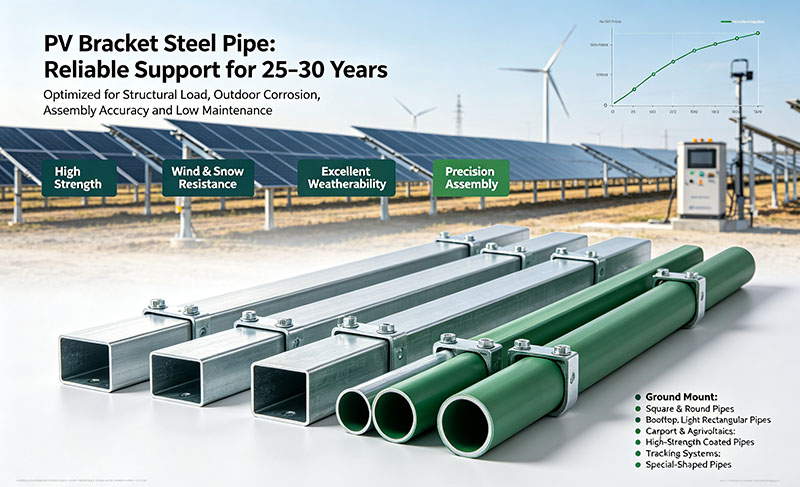
Solar Panel Bracket Steel Pipe: Definition, Classification, Performance and Selection Guidelines
Solar panel bracket steel pipe is a dedicated structural steel product for solar power generation systems. Serving as the core load-bearing and supporting component of solar mounting structures, it undertakes the dead load of solar panels, as well as dynamic loads such as wind pressure -
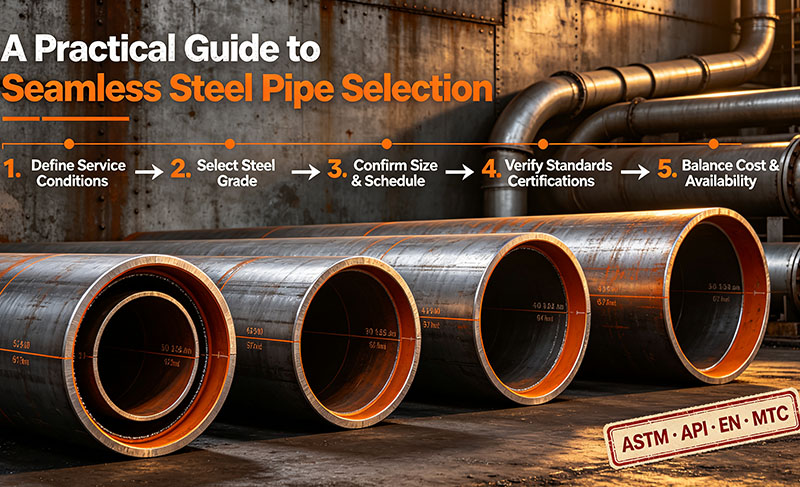
A Complete Guide to Selecting the Right Seamless Steel Pipe
Seamless steel pipes are essential components in oil and gas, chemical processing, power generation, hydraulic systems, and industrial piping projects. Unlike welded steel pipes, they feature no longitudinal weld seams, delivering uniform structural strength, superior pressure resistance, and excellent durability under extreme working conditions. -
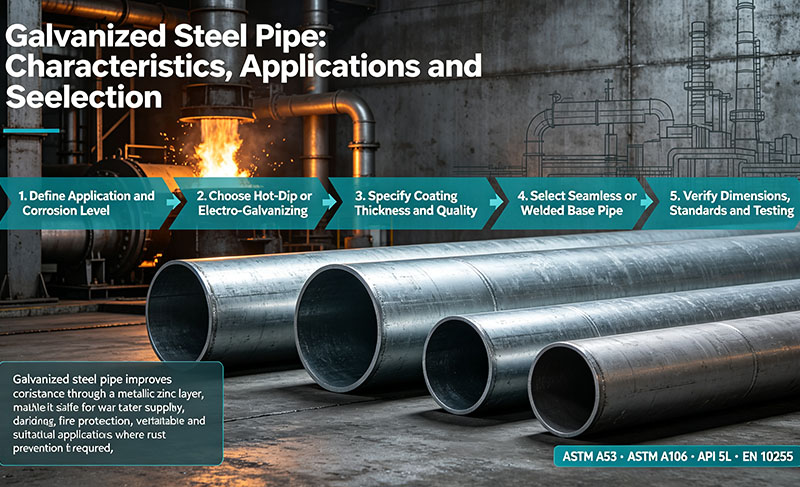
Galvanized Steel Pipe: Process, Types, Properties, Applications and Selection Guide
Galvanized steel pipe is one of the most common and practical tubular products in civil engineering, construction, agriculture, machinery and infrastructure. -
Galvanized Steel Pipe: Process, Types, Properties, Applications and Selection Guide
Galvanized steel pipe is one of the most common and practical tubular products in civil engineering, construction, agriculture, machinery and infrastructure. -
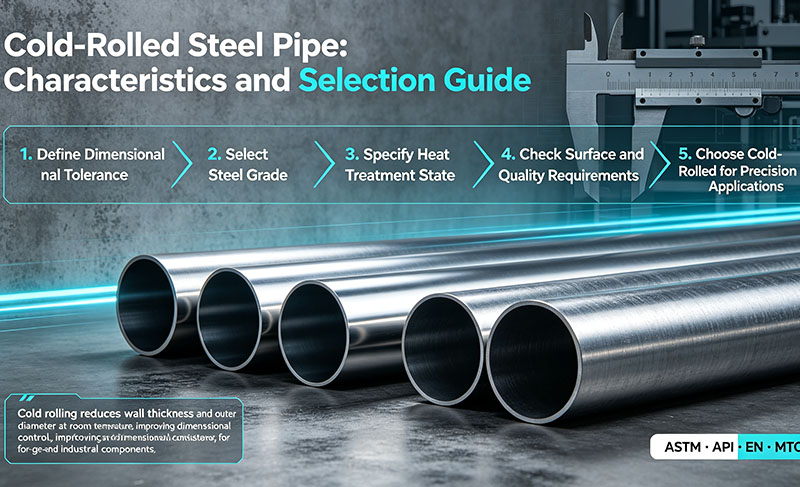
Cold-Rolled Steel Pipe: Characteristics, Process, Advantages, Applications and Selection Guide
Cold-rolled steel pipe is a high-precision tubular product manufactured by further processing hot-rolled or normalized pipe shells at room temperature through cold rolling, cold drawing or skin-pass reduction. -
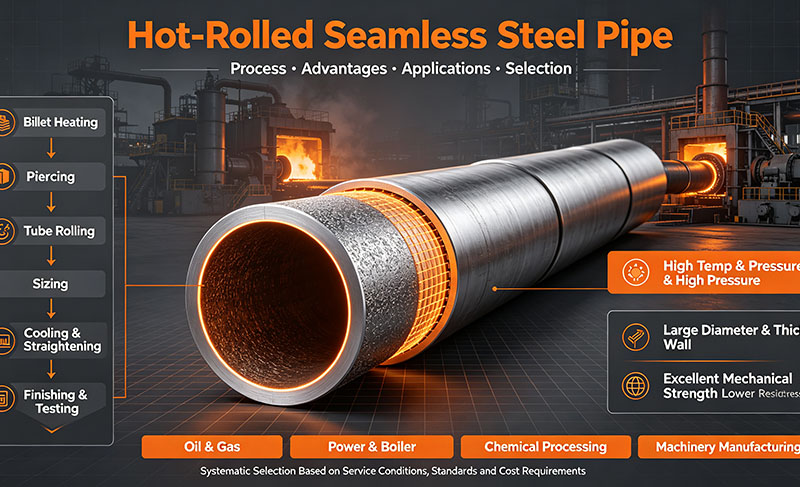
Hot-Rolled Seamless Steel Pipe: Process, Advantages, Applications and Selection Guide
Hot-rolled seamless steel pipe is one of the most widely used tubular products in heavy industry. Manufactured through high-temperature plastic deformation without any welding seam, it features integrated metal structure